
Procurement is Changing. Here's What It Means for Sustainable Surgical Technologies.
When innovators ask us when systemic change will support sustainable technologies in the NHS, we now have a concrete answer.
On 11 June 2026, the Department of Health and Social Care officially launched the new value-based procurement (VBP) model across NHS England. This represents a fundamental shift in how medical devices are evaluated and acquired—one that addresses a long-standing structural barrier to innovation adoption in healthcare.
How the VBP Model Works
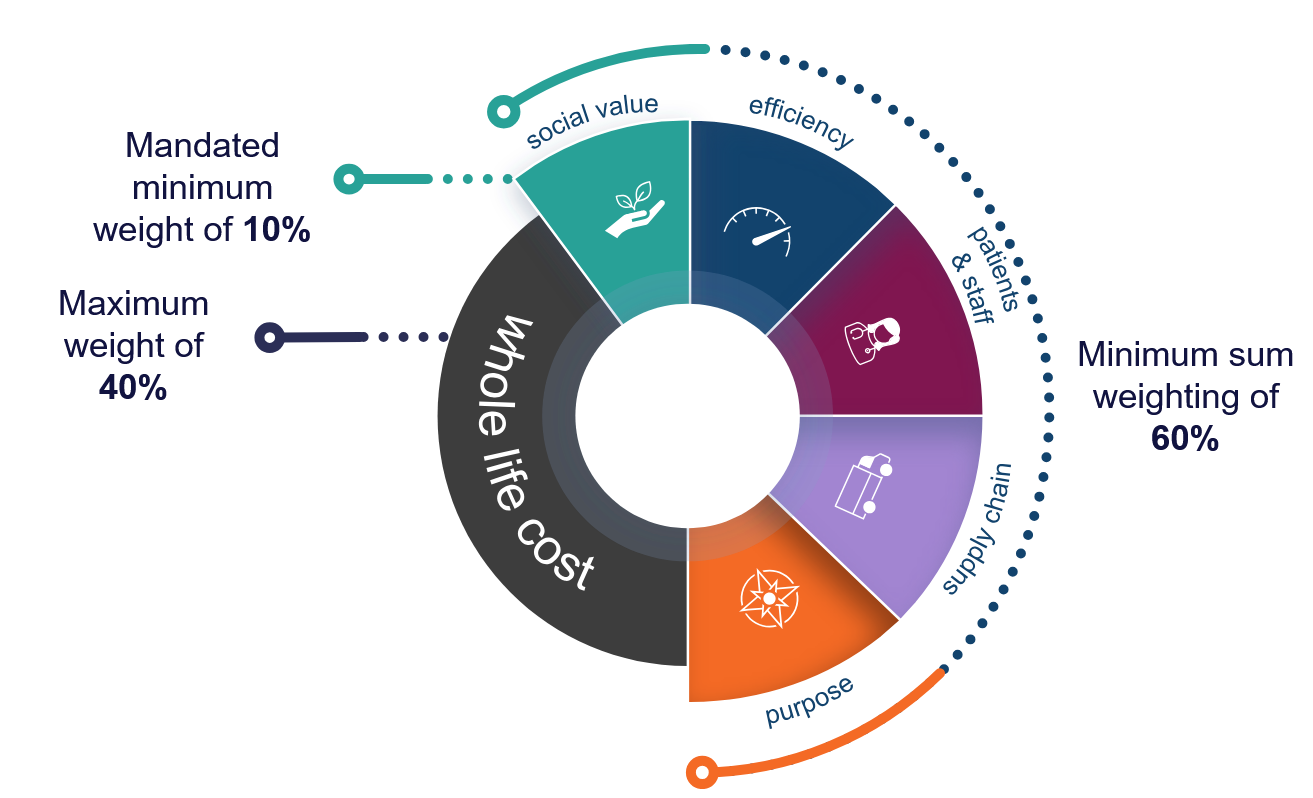
Under the traditional procurement framework, price dominated evaluation criteria. Cost was the primary lever, and competing on sustainability metrics or longer-term value was difficult when initial capital expenditure dominated the decision. The new VBP model inverts this logic.
Price now accounts for only 40% of procurement decisions. At least 60% of the evaluation score is weighted toward wider measures of value: patient outcomes, patient experience, and environmental impact. The model also supports procurement teams in evaluating longer-term return on investment rather than capital cost alone—a significant shift that encourages consideration of reusable instrumentation, durability, and circular practices within NHS operations.
Why This Matters
This change addresses a critical gap between innovation and implementation. Sustainable surgical technologies—from reusable instrument systems to waste reduction practices—often demonstrate superior long-term value. Yet they have struggled to compete in procurement environments where upfront cost was the dominant factor. VBP removes that structural disadvantage.
The Design for Life Roadmap has already demonstrated the potential: significant cost and carbon savings are achievable when procurement frameworks align with sustainability objectives. The VBP model operationalises this insight at scale across NHS England.
What Comes Next
With the procurement infrastructure for sustainable innovation now in place, SUSTAIN will help build the momentum of sustainable change. Our work focuses on exactly this transition: supporting NHS teams to implement these new procurement frameworks, understand how to evaluate devices against broader value criteria, and realise the clinical, economic, and environmental benefits that result.
The pathway exists. The question now is execution—and that's where programmes anchored in clinical translation, partnership, and evidence become essential.